Greek Mythology Courses
Courses in Greek mythology can help you learn about the pantheon of gods and goddesses, mythological heroes, and the cultural significance of myths in ancient Greece. You can build skills in literary analysis, critical thinking, and understanding narrative structures through the exploration of epic tales like those of Homer and Hesiod. Many courses also introduce tools such as digital archives and interactive timelines, which enhance your ability to analyze texts and connect historical contexts with mythological themes.
Popular Greek Mythology Courses and Certifications

University of Pennsylvania
Wesleyan University
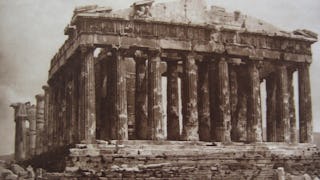
Skills you'll gain: Ancient History, Art History

Yale University
Skills you'll gain: Mindfulness, Habit Formation, Resilience, Goal Setting, Mental Health, Psychology, Productivity, Time Management, Prioritization

Yale University
Skills you'll gain: Psychology, Mental Health Diseases and Disorders, Child Development, Human Development, Human Learning, Psychotherapy, Cognitive Behavioral Therapy, Learning Theory, Critical Thinking, Problem Solving

University of Colorado Boulder
Skills you'll gain: European History, Liberal Arts
What brings you to Coursera today?

Universitat de Barcelona
Skills you'll gain: European History, Anthropology

University of Pennsylvania
Skills you'll gain: Ancient History

Skills you'll gain: Prompt Engineering, Product Planning, Generative AI, New Product Development, Product Management, Product Lifecycle Management, Responsible AI, Innovation, Generative Model Architectures, Product Development, Competitive Analysis, Product Strategy, Commercialization, Generative Adversarial Networks (GANs), Product Roadmaps, Agile Product Development, Stakeholder Communications, Goal Setting, Product Design, Artificial Intelligence
Skills you'll gain: Python Programming, NumPy, Data Analysis

University of Pennsylvania
Skills you'll gain: Financial Statements, Financial Statement Analysis, Return On Investment, Accrual Accounting, Financial Accounting, Capital Budgeting, Financial Reporting, Accounting, Finance, Inventory Accounting, Balance Sheet, Financial Acumen, Income Statement, Financial Forecasting, Equities, General Finance, Cash Flows, Corporate Finance, Forecasting, Financial Analysis

University of Pennsylvania
Skills you'll gain: Financial Statements, Operations Management, Customer Analysis, Operational Efficiency, Financial Statement Analysis, Operational Excellence, Return On Investment, Accrual Accounting, Human Capital, Process Improvement and Optimization, Process Analysis, Branding, Financial Accounting, Marketing, People Management, Capital Budgeting, Finance, Peer Review, Project Design, Corporate Finance


Macquarie University
Skills you'll gain: Excel Formulas, Dashboard, Microsoft Excel, Dashboard Creation, Excel Macros, Data Preprocessing, Spreadsheet Software, Data Validation, Interactive Data Visualization, Data Analysis Software, Business Analytics, Data Modeling, Analytical Skills, Advanced Analytics, Business Mathematics, Productivity Software, Data Integrity, Business Reporting, Automation, Data Management
Best free Greek Mythology courses
High-quality free Greek Mythology courses you can start today.
- The Ancient GreeksWesleyan UniversityMixed1 - 3 MonthsFree
- The Science of Well-BeingYale UniversityMixed1 - 3 MonthsFree
- Introduction to PsychologyYale UniversityBeginner1 - 3 MonthsFree
Best Greek Mythology courses from University of Pennsylvania
Top-rated Greek Mythology courses offered by University of Pennsylvania on Coursera.
- Greek and Roman MythologyUniversity of PennsylvaniaMixedUniversity of Pennsylvania
- Ancient Philosophy: Aristotle and His SuccessorsUniversity of PennsylvaniaMixed1 - 3 MonthsUniversity of Pennsylvania
- Introduction to Finance and AccountingUniversity of PennsylvaniaBeginner3 - 6 MonthsUniversity of Pennsylvania
Best Greek Mythology certificate programs
Earn a certificate in Greek Mythology from top universities and companies.
- IBM AI Product ManagerIBMBeginner3 - 6 MonthsProfessional Certificate
- Business FoundationsUniversity of PennsylvaniaBeginner3 - 6 MonthsSpecialization
- Excel Skills for BusinessMacquarie UniversityBeginner3 - 6 MonthsSpecialization
Best Greek Mythology courses for beginners
Top-rated beginner-friendly Greek Mythology courses with no prerequisites.
- Old Norse Mythology in the SourcesUniversity of Colorado BoulderBeginner1 - 4 WeeksNo prerequisites
- Magic in the Middle AgesUniversitat de BarcelonaBeginner1 - 3 MonthsNo prerequisites
- Python for Data Science, AI & DevelopmentIBMBeginner1 - 3 MonthsNo prerequisites










