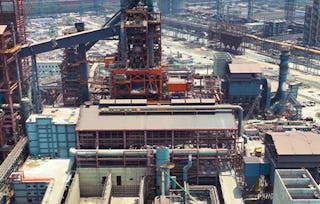
This course on Design of Special Utility Systems is intended for Mechanical and Chemical Engineering professionals, faculty members, and students who seek practical and design-oriented knowledge of industrial utility systems. The program covers the systematic design of fuel systems, thermic fluid systems, steam and condensate systems, and refrigeration systems used in process plants and industrial facilities. Learners will gain a clear understanding of fuel system components such as storage, pumping, filtration, and metering, along with the evaluation and selection of solid, liquid, and gaseous fuels for efficient and environmentally compliant operation.

Gain next-level skills with Coursera Plus for $199 (regularly $399). Save now.

Design of Special Utility Systems
This course is part of Design of Utility Systems for Industrial Plants Specialization

Instructor: Subject Matter Expert
Included with
Recommended experience
Skills you'll gain
Details to know

Add to your LinkedIn profile
January 2026
4 assignments
See how employees at top companies are mastering in-demand skills

Build your subject-matter expertise
- Learn new concepts from industry experts
- Gain a foundational understanding of a subject or tool
- Develop job-relevant skills with hands-on projects
- Earn a shareable career certificate

There are 4 modules in this course
This particular module deals in fuels systems used in Chemical Process Industries. In process industries, such as petrochemical, pharmaceutical, food and beverage, and power generation sectors, the fuel system plays a crucial role in providing energy for various manufacturing processes, heating, and power generation. The design of a fuel system in such industries focuses on delivering fuels safely and efficiently to maintain continuous operations while ensuring that the energy requirements of different process units are met. This system often includes the storage, transportation, regulation, and delivery of fuels to different units within the plant. In this module, solid, liquid and gaseous fuels their equipment involved in handling, their advantages and disadvantages are covered in detailed. Additionally, fuel emissions and air pollution control required and reference project documents for design of fuel systems are covered in this module.
What's included
6 videos2 readings1 assignment9 plugins
The Design of Thermic Fluid Systems module focuses on the principles, components, and processes involved in the design and implementation of thermic fluid heating systems, which are widely used in industries requiring high-temperature heating at low pressure. These systems utilize heat transfer fluids (HTFs) to efficiently transport heat from one point to another, providing a stable and controlled heating environment for various applications, such as industrial heating, drying, chemical processing, and heat treatment. This module will guide learners through the fundamental design concepts, equipment selection, and key considerations needed for building and optimizing thermic fluid systems. By understanding the operation, design, and maintenance requirements of these systems, learners will be equipped to design systems that are energy-efficient, cost-effective, and safe.
What's included
4 videos1 assignment9 plugins
The Design of Steam and Condensate Systems module is dedicated on the principles, components, and best practices involved in the design, implementation, and optimization of steam and condensate recovery systems. Steam is one of the most widely used utilities in process industries for heating, power generation, sterilization, and numerous other applications. The design of efficient steam and condensate systems is crucial to achieving energy efficiency, reducing operating costs, and maintaining reliable operations in industrial settings. This module will provide an in-depth understanding of steam generation, distribution, and condensate recovery, and guide learners through the entire design process from the steam boiler to condensate return systems. By mastering the design considerations for both steam and condensate systems, learners will be able to improve system performance, prevent inefficiencies, and ensure safe and reliable operation.
What's included
6 videos1 assignment7 plugins
This module on the Design of Refrigeration Systems is designed to provide a comprehensive understanding of the principles, components, and design considerations involved in creating efficient refrigeration systems. Refrigeration is an essential utility in various industries such as food processing, pharmaceuticals, chemical manufacturing, air conditioning, and more. This module covers the entire process of designing a refrigeration system, including the selection of refrigerants, components, and safety measures, while focusing on system optimization for energy efficiency and reliability. Learners will explore the thermodynamic principles behind refrigeration, the components involved, and the processes necessary to create systems capable of maintaining desired temperatures in a variety of applications. By mastering the design process and system management, learners will be able to design refrigeration systems that are both effective and environmentally friendly.
What's included
5 videos1 assignment8 plugins
Earn a career certificate
Add this credential to your LinkedIn profile, resume, or CV. Share it on social media and in your performance review.
Instructor

Offered by
Explore more from Mechanical Engineering

L&T EduTech
L&T EduTech
Status: Free TrialL&T EduTech
Why people choose Coursera for their career


Open new doors with Coursera Plus
Unlimited access to 10,000+ world-class courses, hands-on projects, and job-ready certificate programs - all included in your subscription
Advance your career with an online degree
Earn a degree from world-class universities - 100% online


Join over 3,400 global companies that choose Coursera for Business
Upskill your employees to excel in the digital economy
Frequently asked questions
To access the course materials, assignments and to earn a Certificate, you will need to purchase the Certificate experience when you enroll in a course. You can try a Free Trial instead, or apply for Financial Aid. The course may offer 'Full Course, No Certificate' instead. This option lets you see all course materials, submit required assessments, and get a final grade. This also means that you will not be able to purchase a Certificate experience.
When you enroll in the course, you get access to all of the courses in the Specialization, and you earn a certificate when you complete the work. Your electronic Certificate will be added to your Accomplishments page - from there, you can print your Certificate or add it to your LinkedIn profile.
Yes. In select learning programs, you can apply for financial aid or a scholarship if you can’t afford the enrollment fee. If fin aid or scholarship is available for your learning program selection, you’ll find a link to apply on the description page.
More questions
Financial aid available,